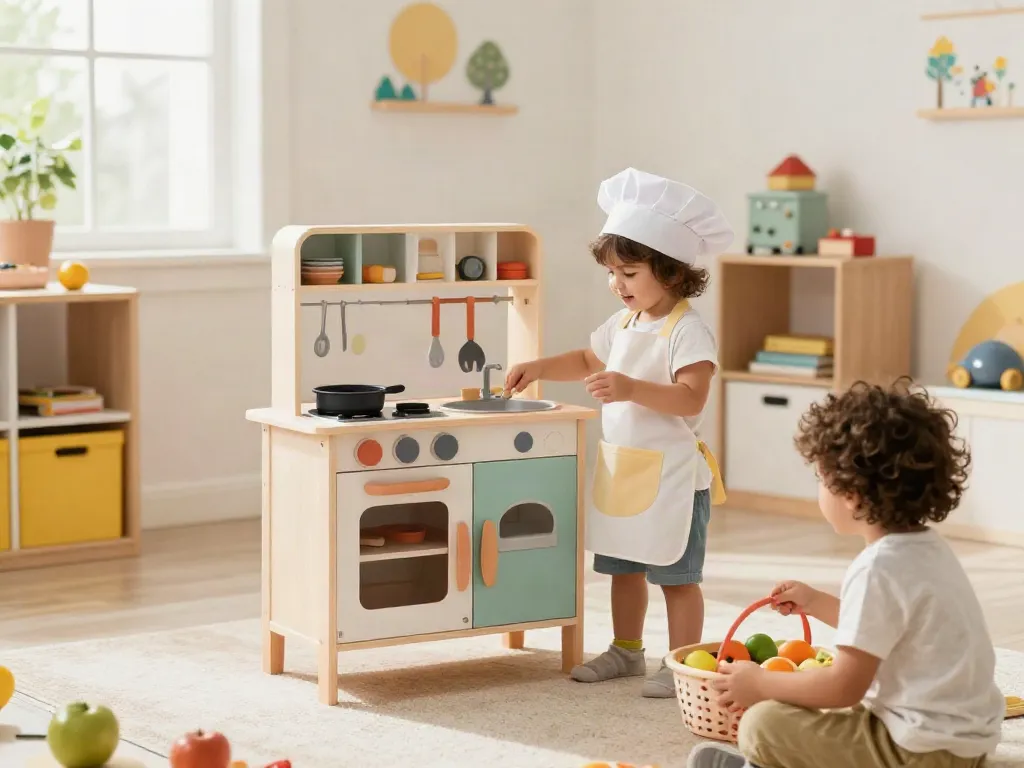
Understanding the Importance of Play Kitchens
Play kitchens hold more value than mere entertainment for children; they serve as developmental tools that encourage learning through imaginative play. These miniature culinary environments allow kids to mimic the adult world, enhancing their cognitive skills and social interactions. When exploring options, play kitchen can be a fantastic addition to any household, fostering creativity and engagement.
Why Play Kitchens Promote Cognitive Development
Engaging with play kitchens can significantly bolster a child's cognitive development. When children engage in pretend cooking, they are not only simulating real-life scenarios but also practicing critical thinking and problem-solving skills. For example, determining how to "cook" a meal requires planning and sequencing. Children learn to follow steps, whether it's mixing ingredients or setting a table, which enhances their ability to manage tasks in a logical order.
Social Skills and Imagination Enhancement through Pretend Play
Play kitchens offer an excellent platform for children to develop social skills. As they engage in role-play with peers, they practice communication, negotiation, and cooperation. These interactions encourage empathy as they take on different roles, whether as a chef, a customer, or a server. Additionally, the imaginative aspects of play kitchens stimulate creativity, as children invent recipes and stories around their play, fostering a richer imaginative landscape.
Age Appropriateness: When to Introduce a Play Kitchen
While many parents might wonder when to introduce a play kitchen, experts recommend it around the ages of 2 to 6. At this stage, children are typically capable of imaginative play and can grasp basic concepts of cooking. It's essential to select kitchens that are age-appropriate and safe, ensuring that the materials and features are suited to the child's developmental stage. This not only promotes safe play but also maximises the learning experience.
Choosing the Right Play Kitchen for Your Child
Selecting the perfect play kitchen can seem daunting, given the plethora of options available. However, understanding the key features and materials can greatly simplify the decision-making process.
Materials: Wooden vs. Plastic Play Kitchens
When it comes to materials, wooden play kitchens are often praised for their durability and aesthetic appeal, providing a classic look that can withstand the rigours of play. They are typically more robust than their plastic counterparts, offering longevity. However, plastic play kitchens are often lighter, more affordable, and feature vibrant colours, making them visually appealing to younger children. Ultimately, the choice between wooden and plastic should be influenced by the child's preferences and the parents' budget.
Features to Look For: Safety and Interactivity
Safety is paramount when choosing a play kitchen. Look for kitchens with rounded edges and non-toxic materials. Additionally, interactive features, like lights and sounds, can enhance the play experience. Elements such as a working sink or realistic cooking utensils not only stimulate imaginative play but also encourage children to engage in their environment more deeply.
Budget Considerations for Quality Play Kitchens
Play kitchens can vary significantly in price, from budget-friendly options to high-end models. It's essential to consider what features are most important to you and your child. Balancing quality with budget allows parents to invest in a play kitchen that will last, providing value in both playtime and educational benefits.
Top Misconceptions About Play Kitchens
Despite their growing popularity, various misconceptions exist surrounding play kitchens that can mislead potential buyers. Clarifying these can help parents make informed decisions.
Play Kitchens Are Just Toys: The Educational Value
Many perceive play kitchens as mere toys, overlooking their educational value. Research indicates that they play a critical role in developing essential life skills. From learning about nutrition to understanding household tasks, kids gain practical knowledge that supports their growth. These experiences foster independence and help children develop a sense of responsibility.
All Play Kitchens Are the Same: Understanding Varieties
Not all play kitchens are created equal. Variations in size, design, and functionality cater to a wide range of ages and interests. Some kitchens come equipped with additional features such as food items, utensils, and even interactive technology. Parents should explore different styles to find one that aligns with their child's play preferences and space requirements.
How Much Space Do You Really Need for a Play Kitchen?
The belief that you need a substantial amount of space for a play kitchen can deter parents from making a purchase. However, many models are designed compactly, fitting into small areas while still providing ample play opportunities. Measuring the available space beforehand can help identify the best fit for your home.
Setting Up Your Ideal Play Kitchen Environment
Creating an engaging environment for a play kitchen enhances the overall play experience. Here are some tips for optimising the play kitchen area.
Tips for Organising a Play Kitchen Area
Designating a specific area for the play kitchen can help children focus and engage more deeply in their play. Incorporating shelving or storage bins can also help organise kitchen accessories and food items, reducing clutter and encouraging neatness. Ensure that the area is easily accessible, allowing children to freely play without adult intervention.
Incorporating Play Kitchen Accessories and Food Items
Accessories play a crucial role in the play kitchen experience. Consider investing in various toy foods, utensils, and cooking tools. This not only sparks creativity but also introduces children to different elements of cooking and food preparation. Opt for realistic-looking items that enhance the imaginative play scenario.
Creating an Inviting Atmosphere for Play
The atmosphere can significantly affect a child's willingness to engage with their play kitchen. Incorporating colourful decorations, perhaps a small table and chairs for hosting "dinner," can transform the space into a culinary haven. Don't hesitate to include some child-friendly kitchenware to make the experience feel more authentic.
Future Trends in Play Kitchens for 2026
As we look to the future, several trends are emerging in the realm of play kitchens that hold promise for enhancing children's play experiences.
Eco-friendly Options: Sustainable Materials in Play Kitchens
With increasing awareness of environmental issues, eco-friendly play kitchens made from sustainable materials are gaining popularity. Parents are opting for kitchens constructed from recycled or responsibly sourced materials, ensuring they contribute positively to the environment while providing quality toys for their children.
Technological Innovations in Pretend Play Experiences
As technology continues to evolve, so does the play kitchen landscape. We can expect to see more interactive features, such as app connectivity, where children can learn cooking techniques or recipes through digital play. This convergence of digital and physical play is set to create richer experiences for young chefs.
Creating Interactive Play Kitchen Experiences with Apps
Apps designed to complement play kitchens are set to become a staple. These applications could offer child-friendly recipes, cooking challenges, or even virtual cooking classes, making the play experience multidimensional and educational. This can enhance creativity, making play kitchens a hub of learning and fun.
What age should a kid get a play kitchen?
The ideal age to introduce a play kitchen is generally between 2 to 6 years, when children are most open to imaginative play and learning basic cooking concepts.
How much does a play kitchen cost?
The cost of play kitchens varies widely, with options ranging from under £50 for simple models to over £300 for more elaborate setups with advanced features.
Is it worth getting a play kitchen?
Investing in a play kitchen can be worthwhile, as it supports cognitive development, social skills, and imaginative play, making it a valuable addition to any child's toy collection.
Which play kitchen is the best?
The "best" play kitchen varies based on individual needs, but options from reputable brands known for quality and safety, such as KidKraft or Melissa & Doug, are often recommended.
What are the best accessories for a play kitchen?
Highly recommended accessories include various toy foods, utensils, pots, and pans that add realism to play, sparking creativity and enhancing the overall kitchen experience.